



















Accelerated Design of Advanced Alloys with Reduced Critical Raw Materials Content

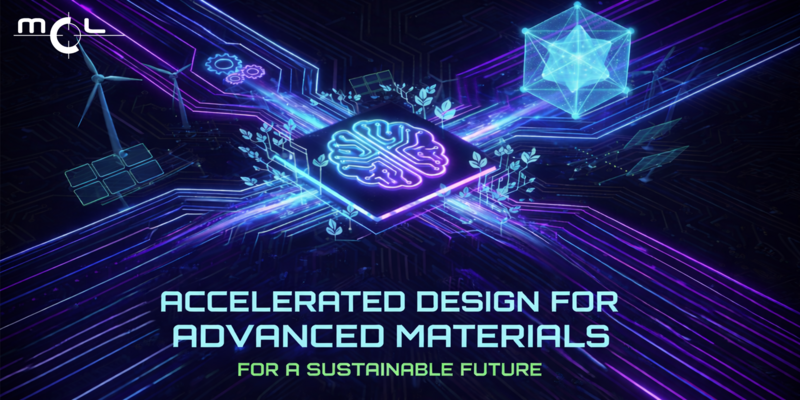
The aim of COMET Module A3Red is the accelerated, AI-driven design of high-performance alloys with low or zero critical raw material content. For this sake, generic building blocks for multi-scale modelling of materials will be developed and integrated into an interoperable and modular research platform. The multi-scale modelling will leverage the inherent process-structure-property relationships of metallic and intermetallic materials, bridging the gap between the atomic and continuum scales using machine learning approaches. The platform and developed models will be modular in design and validated for the selected alloys. A3Red will focus on functional magnetic materials that are free of rare earth elements (fREEmag), on secondary source advanced aluminium alloys for use in high-strength structural applications and high-conductivity electrical overland power lines (SustAl), as well as on high-strength, and on radically new high-temperature-resistant metal alloys. Notably, the methodology being developed will serve as a foundation for future applications to any type of material and processing, and it may even be extended to integrated product engineering.
Thematic focuses
- Hybrid multi-scale accelerated materials design loops for fast identification of optimized new materials
- Novel experimental methods for the synthesis, processing and characterization of new advanced materials
- AI-based scale bridging from atomic to continuum scale by linking physical and machine learning models to understand complex mechanisms on a physical basis and extract relevant relations
- FAIR (findable, accessible, interoperable, reusable) tools (physical and machine learning models) and data (from experiment, theory and literature) for efficient materials design
- Demonstration by exemplary critical raw material reduction and/or increased secondary raw material usage for three promising material classes.
Download FactSheet for more information
A3Red is a COMET Module within the COMET – Competence Centers for Excellent Technologies Programme and funded by BMIMI, BMWET, and the federal states of Styria, Upper Austria, and Carinthia. COMET is managed by FFG.
For more information, please visit:
FFG: https://www.ffg.at/
COMET: https://www.ffg.at/comet
Funding
Österreichische Forschungsförderungsgesellschaft mbH
Land Oberösterreich, Abteilung Wirtschaft und Forschung

Land Kärnten, Kärntner Wirschaftsförderungs Fonds

Land Steiermark, Economy, Labour, Finance, Science and Research

Federal Ministry Economy, Energy and Tourism Republic of Austria
Federal Ministry Innovation, Mobility and Infrastructure Republic of Austria
Partners
Company Partners
AMAG Rolling GmbH
LUMPI-BERNDORF Draht- und Seilwerk GmbH
MAGNA Auteca GmbH
Miba Sinter Austria GmbH
Treibacher Industrie AG
Hammerer Aluminium Industries GmbH
MatCalc Engineering GmbH
Scientific Partners
Austrian Academy of Sciences – Erich Schmid Institute of Materials Science
Montanuniversität Leoben – Chair of Nonferrous Metallurgy
Montanuniversität Leoben – Chair of Physical Metallurgy
Montanuniversität Leoben – Chair of Metal Forming
TU Wien – Institute of Materials Science and Technology
University for Continuing Education Krems – Center for Modeling and Simulation
FH-OÖ Forschung und Entwicklung
Czech Academy of Sciences – Institute of Physics of Materials
Max-Planck-Institut für Nachhaltige Materialien GmbH
Team at MCL
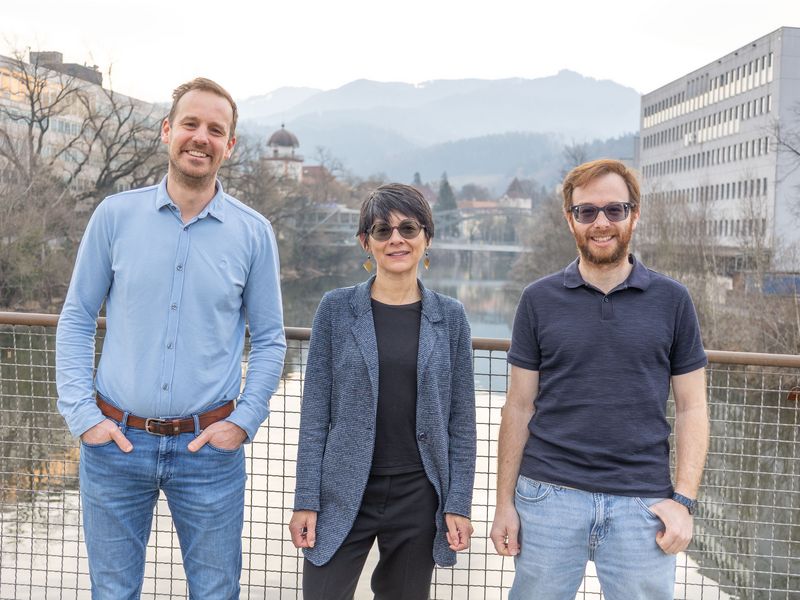
The COMET Module A3Red is led by a highly complementary team bringing together expertise across materials design, characterization, and digital integration:
Daniel Scheiber heads the Computational Materials Design group, where his work focuses on multi-scale modelling of materials, spanning from atomic to macroscopic levels. His research emphasizes accelerated materials design strategies, enabling the efficient development of next-generation materials.
Natalia Bedoya leads the Software Development team and serves as Data Steward at MCL. She is responsible for advancing software solutions and ensuring robust data management practices, providing the digital backbone for data-driven materials research.
Gerald Ressel leads the Materials Design and Characterization group, with a strong focus on uncovering structure–property relationships in innovative materials. His work combines advanced characterization techniques to understand and optimize mechanical and physical properties.
Together, the team integrates computational design, experimental validation, and digital infrastructure to drive innovation in materials development.
Publications
Recent Advancements in Bulk Processing of Rare-Earth-Free Hard Magnetic Materials and Related Multiscale Simulations
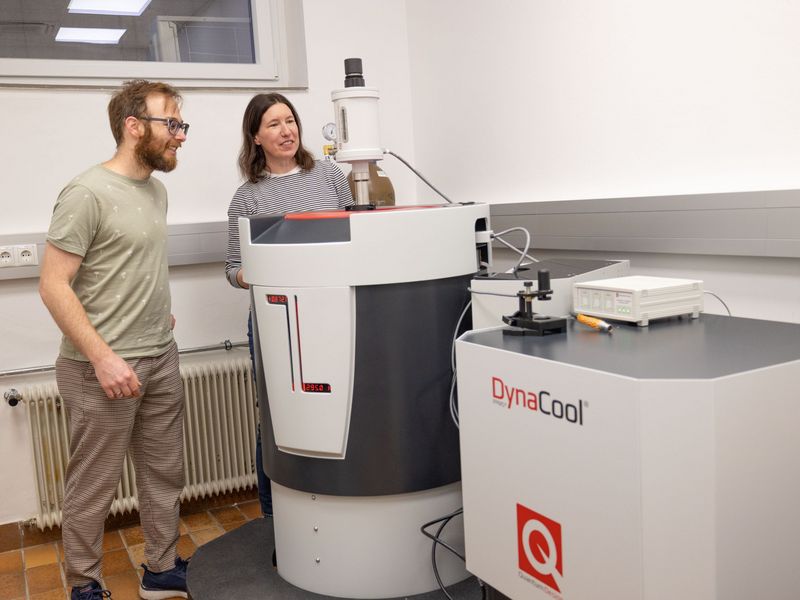
Daniel Scheiber, Andrea Bachmaier, Adv. Eng. Mater. 2026; 28, e202502032. https://doi.org/10.1002/adem.202502032
Exciting progress in the development of rare-earth-free magnetic materials which are essential for sustainable and resilient green energy technologies.
Our new paper, “Recent Advancements in Bulk Processing of Rare-Earth-Free Hard Magnetic Materials and Related Multiscale Simulations,” by Daniel Scheiber and Andrea Bachmaier, explores the latest breakthroughs in bulk processing techniques and advanced simulations for promising materials such as α-MnBi, τ-MnAl, L1₀-FeNi, α″-Fe₁₆N₂, Fe–Ta, and Fe₂P.
The research highlights how multiscale modeling and innovative processing methods are paving the way toward high-performance, sustainable magnetic materials without relying on critical rare-earth elements.
Additionally, the paper was selected as an Editor’s Choice!
Read the full paper here: https://doi.org/10.1002/adem.202502032
News
Kick-off fREEmag
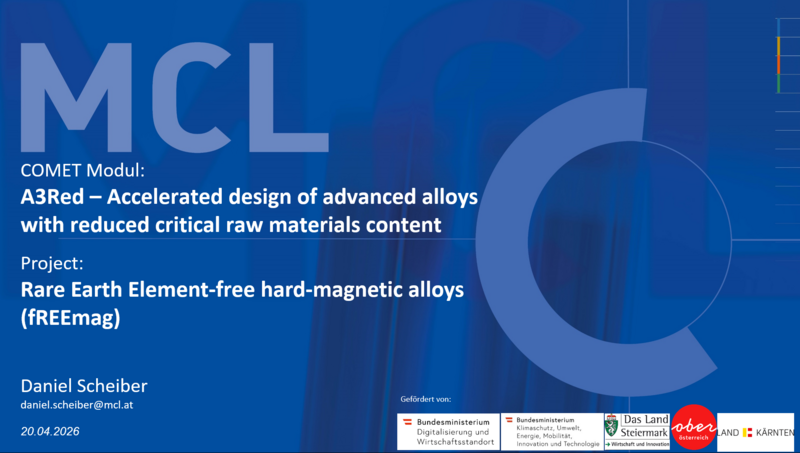
The fREEmag project officially kicked off on April 20, 2026, bringing together a consortium of leading academic and industrial partners. This pioneering initiative aims to accelerate the development of high-performance, rare-earth-free hard magnetic materials. By combining integrated multi-scale modelling with advanced experimental techniques, the project seeks to reduce dependence on critical raw materials used in electric vehicle motors and wind turbines.
At its core, fREEmag focuses on understanding and controlling the relationships between processing, structure, and properties in MnBi-based hard magnets. This approach ensures that the resulting materials are not only high-performing but also sustainable and commercially viable. By tightly linking theory, simulation, and data-driven AI, the project bridges the gap between atomic-scale discovery and industrial-scale production.
Through close collaboration between academia and industry, the consortium is building a fast and efficient development pipeline for next-generation green technologies. In doing so, fREEmag strengthens supply chain resilience and positions its partners at the forefront of the global shift toward a sustainable and circular economy.