


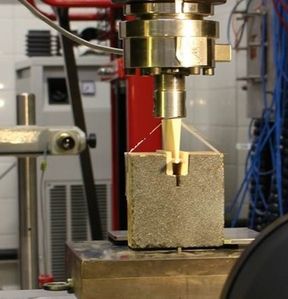
Understanding the Fracture Behavior of Refractory Materials
Simulating the fracture behavior of refractory materials helps understand damage mechanisms and extend service life.
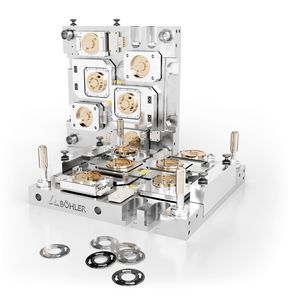
How “Shallow” and “Deep” Cracks Grow
A novel testing method demonstrates the similarity in the fatigue behavior of cracks in conventional specimens and application-relevant surface cracks.

Smart Software for the Energy Transition: Supporting Autonomous Sensor Systems Design
Simulation environment for energy-autonomous wireless sensor nodes enables efficient design of cost-effective and long-lasting condition monitoring systems, for example for wind turbines.

Using Artificial Intelligence in Sensor Nodes – Also for Small Businesses
Automated assessment of the feasibility and energy consumption of AI on microcontrollers enables an efficient design process, even for small companies.
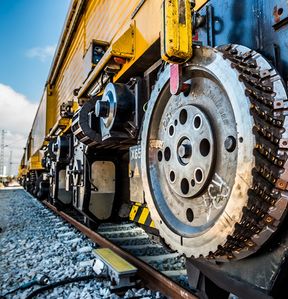
Tools for Railway Track Maintenance – Toward Predictive Maintenance
Improving predictive maintenance for railroad tracks
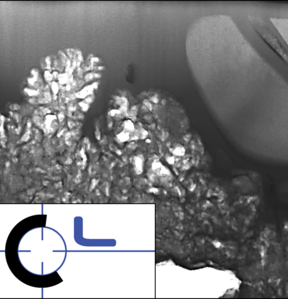
A New Perspective on the Degradation of Silicon-Based Anodes
The significant volume changes of silicon during charging and discharging lead to structural transformation (amorphization) of the material, which plays a decisive role in determining the capacity and...

How Can the Energy Density of Li-Ion Batteries Be Significantly Increased?
4D imaging tomography of Li-ion cells reveals the lithiation behavior of silicon: insights enable improved batteries in terms of range, lifespan, …